
Have you noticed your clear aligners not fitting properly? Gaps, looseness, or a tray that won’t fully seat can be frustrating, but these issues often have simple, manageable causes. Understanding the reason behind the poor fit can help you take the right steps and keep your treatment progressing as planned.
At White Stone Aligners, we support patients across Kerala and India throughout their clear aligner journey. With personalized guidance and professional monitoring, we help identify fit issues early and keep your smile treatment comfortable, predictable, and on track.
How to Know If You Have Clear Aligners Not Fitting Properly
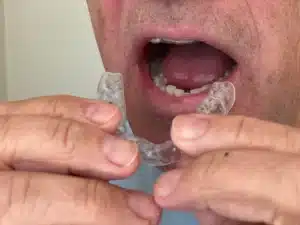
Not every gap or wobble is a problem. New trays often feel slightly loose in one spot as your teeth begin shifting into position, and this is completely normal for the first day or two. However, certain signs suggest your aligners are not fitting correctly and need attention.
Watch for these warning signs:
- Visible gaps between the tray and specific teeth
- The aligner does not click or seat fully at the back molars
- One side feels tight while the other feels loose
- The tray lifts on its own while talking, chewing, or sleeping
- Edges feel sharp, rough, or uneven against your gums
- The same fit issue continues for more than three to four days
A well-fitting aligner should sit flush against every tooth with only mild, even pressure. If yours feels different from this, it’s worth pausing to look at the cause rather than pushing through discomfort.
Many fit problems start with technique rather than the tray itself. Learning to Insert and Remove Clear Aligners Correctly from day one prevents unnecessary pressure points on specific teeth and helps every tray seat exactly the way it was designed to.
7 Reasons for Clear Aligners Not Fitting Properly
Understanding the cause is the fastest way to a solution. Here are the most common reasons patients experience aligners not fitting correctly during treatment.
1. Not Wearing Aligners for the Recommended Hours
Aligners need roughly 20 to 22 hours of daily wear to move teeth on schedule. Not Wearing Clear Aligners Properly is the single biggest reason trays feel loose or refuse to seat when you switch to the next set, since your teeth simply haven’t shifted far enough yet.
2. Switching Trays Too Early
Moving to a new aligner before your teeth have finished shifting means the tray won’t match your current tooth position. This is especially common when patients try to speed up treatment on their own by changing trays a day or two ahead of schedule, without realizing that tooth movement needs the full cycle to complete.
3. Warped or Damaged Trays
Hot water, direct sunlight, or a hot car can distort the plastic within minutes. In India’s warm climate, aligners left in a bag, car dashboard, or near a window are particularly at risk of losing their exact shape.
4. Missing or Worn Attachments
Small tooth-coloured attachments give aligners extra grip on certain teeth and help control rotation or tipping movements. If one falls off or wears down, the tray loses that anchor point and can shift or feel loose right in that spot, sometimes affecting the fit of neighbouring teeth too.
5. Incorrect Insertion Technique
Pressing an aligner unevenly, from one side only, or biting it into place can leave it seated incorrectly, leading to clear aligners not fitting snugly across the whole arch instead of evenly.
6. Natural Tooth Movement Between Trays
Even short periods without your aligners allow teeth to drift slightly, since they are naturally connected to elastic gum fibres that pull them back toward earlier positions. Skipping just a few hours here and there adds up over a week, and the current tray may no longer match perfectly.
7. Underlying Discomfort or Sensitivity
Occasionally, mild soreness or gum irritation makes an aligner feel like it doesn’t fit, when it’s actually a normal part of active tooth movement. Our detailed blog on Clear Aligner Side Effects explains what to expect at each stage and when discomfort simply signals progress rather than a real fit problem.
How to Resolve the Issue of Clear Aligners Not Fitting Properly

If you’re asking yourself, why are my clear aligners not fitting?, these steps usually restore a comfortable, secure fit within a few days.
- Increase wear time.Commit to the full 20–22 hours daily; consistency is the single most effective fix for almost every fit issue.
- Use aligner chewies. Biting down gently on chewies for a few minutes, focused on tight spots, helps trays seat fully over your teeth.
- Avoid heat exposure. Store aligners in their case, away from hot water, direct sun, and hot vehicles, especially during India’s summer months.
- Check your attachments. Contact your orthodontist promptly if an attachment feels loose or has come off completely.
- Never force a tray. Forcing an ill-fitting aligner into place can crack the plastic or place unsafe pressure on your teeth and gums.
- Book a check-in. If a tray still won’t seat properly after several days of full wear, your provider may recommend re-wearing the previous tray or issuing a refinement.
Why Professional Guidance Matters
Fit problems are rarely permanent, but they do need the right response at the right time. Choosing the best clear aligner treatment means working with a team that monitors your progress through regular scans and adjusts your plan whenever it’s needed, instead of leaving you to guess on your own. Patients who follow their provider’s guidance closely tend to avoid repeated fit issues altogether and finish treatment closer to their original timeline.
Home remedies and forum advice can sometimes make fit problems worse, especially when they involve reshaping trays or skipping stages. A short check-in with your orthodontist is usually faster, safer, and far more reliable than troubleshooting on your own.
Keep Your Clear Aligner Treatment on Track
A tray that feels loose, tight, or won’t seat is usually a sign something small needs adjusting, not a sign of treatment failure. With consistent wear and the right guidance, most fit issues resolve within just a few days.
White Stone Aligners is among the trusted clear aligner providers in Kerala, offering expert monitoring and personalized support so your treatment stays comfortable, predictable, and on track from start to finish.
Experiencing clear aligners not fitting properly? Contact White Stone Aligners for expert guidance and personalized support.
📞 +91 9797974769
📧 info@whitestonealigners.com
FAQs
Q1. Why do my clear aligners not fit properly after a few days?
A. Usually due to reduced wear time, an early tray switch, or heat exposure affecting the plastic.
Q2. Can loose aligners fix themselves over time?
A. Minor looseness may improve with consistent wear, but persistent gaps need professional evaluation.
Q3. Should I force an aligner that doesn’t fit?
A. No. Forcing a tray can damage it or place unsafe pressure on your teeth.
Q4. How does White Stone Aligners help with fit issues?
A. We provide monitoring, refinements, and expert guidance throughout your treatment journey.
Q5. How long does poor aligner fit usually take to resolve?
A. Most fit issues improve within two to four days of consistent, correct wear.