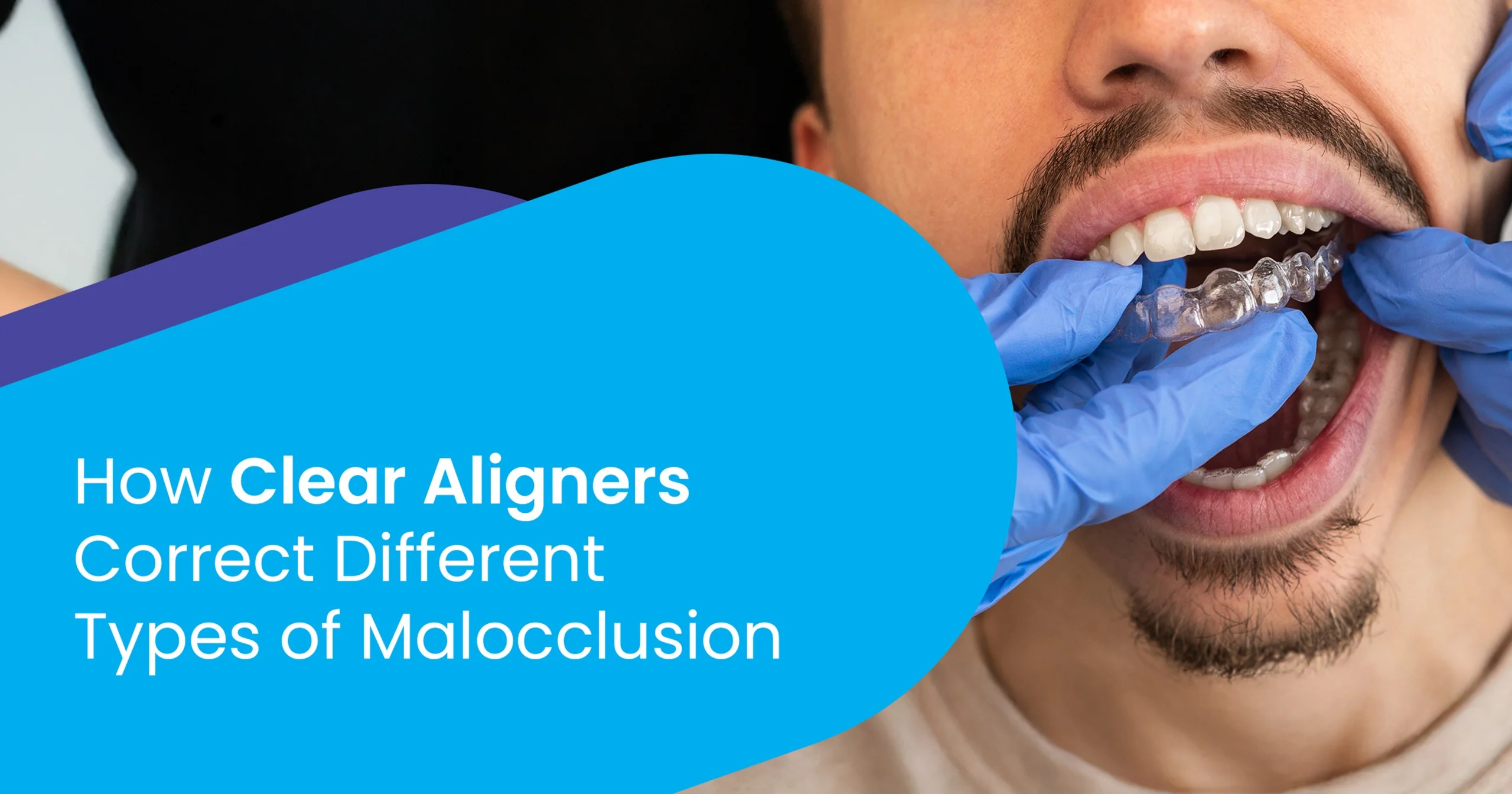
Malocclusion, or misalignment of upper and lower teeth, affects millions worldwide, impacting both oral health and confidence. Fortunately, clear aligners for malocclusion correction now provide a discreet and comfortable alternative to traditional braces.
Clear aligners have changed the way orthodontic problems like crowding, spacing, and bite issues are treated. White Stone Clear Aligners, based in Kerala, India, uses advanced AI scanning and expert orthodontic planning to provide customized, comfortable, and efficient teeth-straightening solutions.
Whether you have crowded teeth, overbite, underbite, or crossbite, understanding how clear aligners correct these issues helps you make informed decisions about orthodontic care.
What Is Malocclusion and Why Does It Matter?

Malocclusion refers to improper alignment between the upper and lower teeth. This condition may range from minor cosmetic concerns to serious functional issues affecting chewing, speech, and oral health.
Common Causes of Malocclusion
- Genetic factors
- Early childhood habits (thumb sucking, pacifiers)
- Jaw growth differences
- Tooth loss or improper eruption
Problems Caused by Malocclusion
Misaligned teeth can lead to:
- Increased tooth decay and gum disease
- Difficulty cleaning teeth
- Uneven tooth wear
- Jaw pain and TMJ disorders
- Speech and breathing issues
Types of Malocclusion
Orthodontists classify malocclusion into:
Class I: Normal bite with crowding or spacing issues
Class II: Overbite where upper teeth protrude
Class III: Underbite where lower teeth protrude
Early treatment with clear aligners for bite correction improves both function and aesthetics.
How Clear Aligners Work for Malocclusion Treatment
Clear aligners gradually move teeth using custom-designed plastic trays created from digital scans.
Step-by-Step Treatment Process
- 3D Digital Scan :
A detailed scan creates a virtual model of your teeth. - Customized Treatment Plan :
Orthodontists map tooth movements stage by stage. - Aligner Fabrication :
Multiple aligner sets are produced for progressive correction. - Sequential Tooth Movement :
Each aligner gently shifts teeth until ideal alignment is achieved.
Patients typically change aligners every 1–2 weeks.
Biomechanics Behind Aligners
Aligners apply controlled pressure to:
- Rotate teeth
- Adjust tooth angles
- Correct bite alignment
- Close gaps
- Reduce crowding
Gradual movement protects teeth and gums while ensuring predictable results.
Types of Malocclusion Clear Aligners Can Correct
Modern aligner systems correct a wide range of orthodontic issues.
1. Crowded Teeth and Gaps
Crowding occurs when teeth lack space, causing overlap. Aligners gradually create space and align teeth.
Spacing problems are corrected by gently closing gaps between teeth.
Treatment duration:
- Mild crowding: 3–6 months
- Moderate cases: 12–18 months
2. Overbite Correction
An overbite is present when the upper teeth excessively overlap the lower teeth.
Clear aligners correct this by:
- Moving upper teeth backward
- Adjusting lower teeth position
- Improving bite balance
Most overbites show significant improvement with aligner therapy.
3. Underbite Management
An underbite is present when the lower teeth protrude beyond the upper teeth.
Aligners reposition teeth to restore proper alignment. Severe skeletal cases may require additional treatment.
4. Crossbite Treatment
Crossbite occurs when upper teeth sit inside lower teeth.
Aligners correct dental crossbites effectively by repositioning affected teeth.
5. Open Bite Correction
An open bite is present when the front teeth fail to touch upon closing the mouth.
Aligners help by:
- Moving front teeth downward
- Adjusting back teeth height
- Improving bite contact
Clear Aligners vs Traditional Braces
Both treatment options are effective, but they differ in comfort and lifestyle
Clear Aligners Advantages

- Nearly invisible appearance
- Comfortable, no metal irritation
- Removable for eating
- Easier oral hygiene
- Fewer dental visits
Braces Advantages
- Better for severe cases
- No compliance issues
- Stronger force control
For mild to moderate malocclusion, aligners offer excellent results with better comfort.
Why Choose White Stone Aligners in Kerala?
White Stone Aligners combines technology, affordability, and expert supervision.
Benefits Include:
- AI-powered digital scanning
- Certified orthodontist planning
- Premium aligner materials
- Affordable pricing options
- Free refinement aligners
- Continuous progress monitoring
This makes White Stone Aligners a trusted choice for malocclusion correction in Kerala.
Factors Affecting Treatment Success
1. Patient Compliance
Aligners must be worn 20–22 hours daily.
2. Case Complexity
More complex cases take longer.
3. Orthodontist Expertise
Expert planning improves success rates.
4. Age and Bone Health
Younger patients often see faster movement, though adults also achieve excellent results.
To learn more, read: Why Clear Aligners Are the Top Orthodontic Choice for Adults and Teens
Conclusion
Clear aligners for malocclusion correction represent a major advancement in orthodontics, offering effective, comfortable, and discreet treatment.
Aligner therapy effectively treats crowding and bite problems with predictable outcomes supported by cutting-edge technology and professional planning. With White Stone Aligners, patients across India gain access to premium, affordable orthodontic care.
Book your consultation today and start your journey toward a confident, healthier smile.
📞 +91 9797974769
FAQ
Q1. What malocclusions can clear aligners treat?
A. Crowding, spacing, overbite, underbite, crossbite, and open bite.
Q2. How long does treatment take?
A. Typically 6–18 months depending on severity.
Q3. Are aligners as effective as braces?
A. Yes, for mild to moderate cases.
Q4. Do aligners hurt?
A. Mild pressure occurs during tray changes but fades quickly.
Q5. Do I need retainers after treatment?
A. Yes, retainers maintain your results.