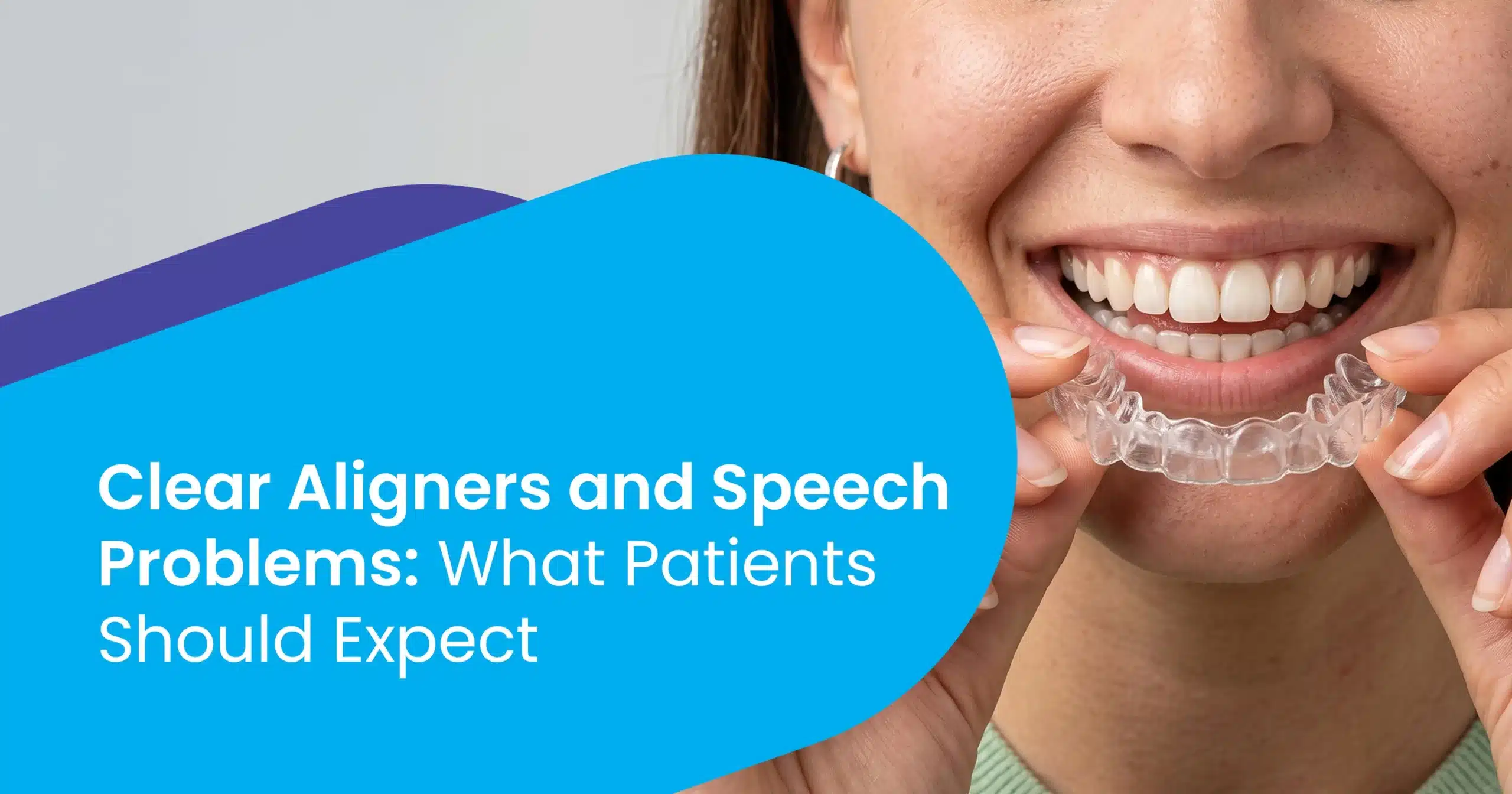
Many people considering clear aligners wonder whether their speech will change during treatment. Clear Aligners and Speech Problems are a common concern for people who rely on clear communication every day. While aligners are designed for comfort, some patients may notice minor speech changes during the initial adjustment period.
White Stone Aligners, a leading clear aligner provider in Kerala, helps patients start their smile journey confidently by explaining what to expect, including temporary speech adjustments
Do Clear Aligners Affect Speech?

Yes, clear aligners can affect speech during the initial adjustment period. Since aligners fit over your teeth, your tongue needs time to adapt to the new shape inside your mouth.
Some patients may notice:
- Slight pronunciation changes
- Mild difficulty with certain sounds
- Temporary lisping
- Increased saliva production
These effects are usually minor and improve as the mouth adapts.
Unlike traditional braces, clear aligners are smooth and custom-made, making adaptation easier for most patients.
Understanding Clear Aligners and Speech Problems
Speech depends on the coordinated movement of the tongue, teeth, lips, and palate. When aligners are introduced, this balance changes slightly.
Because aligners create a thin layer over the teeth, the tongue may initially struggle to find its usual position.
However, most patients adapt within a few days to a few weeks.
Can Clear Aligners Cause a Lisp?
One of the most frequently asked questions is: Can Clear Aligners Cause a Lisp?
Yes, but the effect is usually temporary.
A slight lisp may occur because the tongue touches the aligners when producing certain sounds. This is a normal adjustment process and does not indicate a problem with treatment.
Factors that influence speech adaptation include:
- Individual tongue position
- Aligner thickness
- Treatment complexity
- Consistency in wearing aligners
Patients who wear their aligners as instructed often adapt faster than those who frequently remove them.
Why Speech Changes Occur During Treatment
Speech changes happen because the tongue must learn to work around the aligners.
Several factors contribute:
New Oral Environment
Clear aligners slightly alter the space within the mouth.
Tongue Placement Adjustments
The tongue naturally seeks familiar contact points when speaking. Aligners temporarily alter these points.
Increased Saliva Production
The body may initially interpret aligners as a foreign object and produce more saliva.
Learning New Speech Patterns
The brain gradually adapts and develops new movement patterns for clear speech.
These adjustments happen naturally and usually require minimal effort.
How Long Do Speech Problems Last?
For most patients, speech changes improve within:
- 24 to 72 hours for mild adjustments
- One to two weeks for noticeable improvements
- Three to four weeks for complete adaptation in some cases
The duration varies from person to person.
People who regularly speak, read aloud, or engage in conversations often adapt more quickly.
Tips to Improve Speaking with Aligners
If you experience challenges with clear aligners and speaking, several techniques can help speed up adaptation.
Practice Reading Aloud
Reading books, articles, or presentations aloud helps train tongue movements.
Speak Frequently
Regular conversation allows the mouth to adapt naturally.
Wear Aligners Consistently
Following your orthodontist’s instructions supports faster adjustment.
Repeat Difficult Words
Practicing words containing S, Z, and TH sounds can improve pronunciation.
Stay Hydrated
Drinking water helps manage excess saliva and improves comfort.
Most patients find these simple strategies highly effective.
Are Speech Changes Different from Metal Braces?
Many people assume braces have less impact on speech. In reality, both options can temporarily affect pronunciation.
However, there are several reasons why Clear Aligners Are a Better Choice Than Metal Braces for many patients:
- Smooth and comfortable design
- Removable for eating
- Easier oral hygiene
- Less irritation inside the mouth
- Nearly invisible appearance
Because aligners are tailored to each patient’s teeth, they typically offer a comfortable adjustment experience.
Clear Aligners Side Effects Beyond Speech
While speech changes receive significant attention, patients should also understand other potential clear aligners side effects.
These may include:
- Mild pressure on teeth
- Temporary discomfort after changing trays
- Slight gum sensitivity
- Increased saliva production initially
Most side effects are temporary and indicate that the treatment is actively moving teeth into their desired positions.
Who Is Not Suitable for Clear Aligners?
Although aligners work for many orthodontic cases, understanding Who Is Not Suitable for Clear Aligners is important.
Some patients may require alternative orthodontic solutions if they have:
- Severe jaw alignment issues
- Complex bite problems
- Significant tooth rotations
- Advanced orthodontic complications
A consultation with a dental professional can help identify the most suitable treatment option.
At White Stone Aligners, every treatment begins with a detailed assessment to ensure suitability and predictable outcomes.
Choosing the Best Clear Aligner Treatment
The success of aligner therapy depends on treatment planning, material quality, and professional supervision.
When searching for the best clear aligner treatment, consider:
- Orthodontic expertise
- Advanced digital treatment planning
- High-quality aligner materials
- Ongoing patient monitoring
- Transparent treatment processes
A well-planned treatment reduces discomfort and helps patients adapt more comfortably to everyday activities, including speaking.
Can Speech Problems Be Prevented Completely?
Not always.
Even the most advanced aligners may cause minor speech adjustments during the first few days. However, proper treatment planning and high-quality aligners can reduce the severity of these changes.
The key is understanding that temporary speech changes are a normal part of the adaptation process.
Most patients continue working, studying, attending meetings, and engaging in social activities without significant disruption.
Book your Clear Aligner Treatment in Kerala
Speech changes with clear aligners are usually temporary and improve as patients become accustomed to wearing them. With consistent use and proper guidance, most people regain natural speech within a short period while continuing their smile transformation.
As a trusted Clear aligner brand in Kerala, White Stone Aligners provides advanced, comfortable aligner solutions designed to support effective teeth straightening with minimal disruption to daily life. A confident smile and comfortable treatment experience can go hand in hand.
Ready for a confident smile? Contact White Stone Aligners today.
📞 +91 9797974769
📧 info@whitestonealigners.com
FAQs
Q1. Do clear aligners affect speech permanently?
A. No. Speech changes are usually temporary and improve with regular aligner wear.
Q2. Can clear aligners cause a lisp?
A. Yes. Some patients experience a mild temporary lisp during adjustment.
Q3. How long do speech changes last?
A. Most patients adapt within a few days to a few weeks.
Q4. Can I improve speech while wearing aligners?
A. Yes. Reading aloud and regular speaking help improve adaptation.
Q5. Who is not suitable for clear aligners?
A. Patients with severe orthodontic complications may require alternative treatments.