Clear aligners are a modern, discreet orthodontic solution that has transformed smile correction in Kerala and across the world. However, clear aligners are not suitable for everyone. Certain dental conditions, bite complexities, and lifestyle factors can make aligner treatment ineffective or even risky.
At White Stone Clear Aligners, we provide transparent guidance to help patients identify when clear aligners are not ideal and choose the right orthodontic solution for lasting results.
Quick Answer: Who Should Avoid Clear Aligners?
Clear aligners are not recommended for people with:
- Active gum disease
- Severe crowding (more than 5 mm)
- Complex bite problems
- Severely rotated or tipped teeth
- Poor oral hygiene or low compliance
- Multiple missing teeth
- Young children with developing jaws
A professional orthodontic evaluation is essential before starting treatment.
Understanding Clear Aligners: When Do They Work Best?
Clear aligners work best for patients with:
- Mild to moderate teeth misalignment
- Healthy gums and strong bone support
- Excellent oral hygiene habits
- High compliance (20–22 hours of daily wear)
They apply gentle, controlled pressure to move teeth gradually, usually over 6–18 months. However, aligners have biomechanical limits, which makes them unsuitable for complex orthodontic cases.
Who Is Not Suitable for Clear Aligners? (Detailed Explanation)
1. Active Gum Disease or Periodontitis
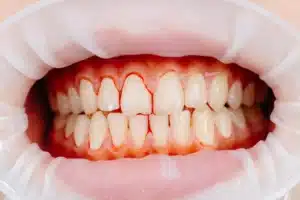
Why clear aligners are not suitable:
Moving teeth in the presence of active gum disease can accelerate bone loss and increase the risk of tooth mobility or tooth loss.
Inflammation weakens the periodontal ligament, the structure that supports tooth movement, making orthodontic treatment unsafe.
What should be done first:
- Scaling and root planing
- Periodontal therapy
- Stabilisation of gum health (probing depth under 4 mm)
Once gum disease is controlled, aligners may be considered under close supervision.
2. Severe Bite Problems
Clear aligners are limited in correcting complex bite issues such as:
- Severe open bite (anterior or posterior)
- Deep bite requiring vertical tooth movement
- Skeletal jaw discrepancies beyond 2 mm
- Severe Class II or Class III malocclusion
These conditions often require fixed braces or combined orthodontic–surgical planning.
3. Severely Rotated or Tipped Teeth
Teeth rotated more than 20 degrees or tipped beyond 45 degrees are difficult to control with removable trays.
Fixed braces offer superior three-dimensional control and are more reliable for these cases.
4. Short Clinical Crowns or Compromised Root Structure
Clear aligners rely on attachments bonded to teeth. Patients with short clinical crowns may not have enough surface area for effective attachment placement.
Aligners may also be unsuitable for patients with:
- Severe bone loss
- Active root resorption
- Complicated root canal history
Such cases require cautious evaluation and alternative treatment planning.
5. Multiple Missing Teeth
Clear aligners cannot replace missing teeth or close large gaps caused by multiple missing teeth.
Patients with missing teeth often need:
- Fixed orthodontic appliances
- Implants, bridges, or prosthodontic treatment
Aligners alone are insufficient in these scenarios.
6. Poor Oral Hygiene or Low Compliance
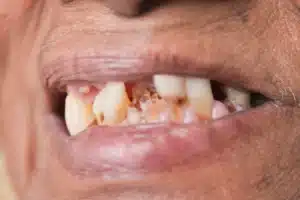
Clear aligners demand responsibility. They must be worn 20–22 hours per day.
Patients who struggle with:
- Consistent wear
- Proper brushing and flossing
- Regular aligner cleaning
are not suitable candidates. Poor compliance increases the risk of cavities, gum disease, and treatment failure. Clear aligners require excellent oral hygiene to avoid cavities and gum problems. Learn best practices in our blog on how to maintain oral hygiene while using clear aligners.
Age-Related Unsuitability: Children with Developing Jaws
Clear aligners are generally not recommended for young children who:
- Still have baby teeth
- Have incomplete permanent tooth eruption
- Are undergoing active jaw growth (usually under 12–13 years)
Teen aligner treatment may be possible once dental development is sufficient and compliance is assured.
Risks and Potential Complications of Clear Aligners
Common (Usually Temporary)
- Mild speech changes
- Increased salivation or dry mouth
- Initial pressure or discomfort
Less Common but Serious Risks
- Root resorption (usually minimal)
- Gum irritation from poor-fitting trays
- Tooth decay due to trapped bacteria
- TMJ discomfort when elastics are used improperly
These risks are significantly reduced with proper case selection and professional monitoring.
When to Choose Alternatives: Clear Aligners vs Fixed Braces
Traditional fixed braces are the gold standard for:
- Complex orthodontic cases
- Severe crowding or spacing
- Significant bite corrections
- Patients with compliance concerns
Fixed appliances work continuously and do not rely on patient discipline.
White Stone Aligners’ Expert Assessment Process
Every patient at White Stone Aligners undergoes:
- Comprehensive oral and gum evaluation
- Digital 3D scans for precise planning
- Medical and dental history review
- Compliance and lifestyle assessment
- Honest discussion of alternative treatments
This ensures safe treatment, realistic timelines, and long-term satisfaction.
Key Takeaways: Is Clear Aligner Treatment Right for You?
Clear aligners are highly effective, but only for the right candidates.
You may not be suitable if you have:
- Active gum disease
- Severe crowding (>5 mm)
- Complex bite issues
- Poor compliance habits
- Developing jaws or multiple missing teeth
The good news: many patients become suitable after treating underlying issues.
Conclusion
Clear aligners are not a one-size-fits-all solution. Understanding your dental condition, gum health, and ability to follow treatment instructions is critical for success.
Choosing the right provider for clear aligners in Kerala ensures proper case selection, safe treatment planning, and long-term oral health.
Book Your Expert Consultation
Not sure if clear aligners are right for you?
Book Your Free Orthodontic Evaluation to get a personalised treatment plan from White Stone Aligners.
📞 +91 9797974769
📧 info@whitestonealigners.com
Frequently Asked Questions (FAQ)
Q: Can I use clear aligners if I have gum disease?
A: No. Gum disease must be fully treated and stabilised before starting aligners.
Q: Can I start aligners if I have cavities?
A: No. All dental decay must be treated first to prevent worsening under aligners.
Q: Are clear aligners suitable for severe crowding in Kerala?
A: Crowding beyond 5 mm is usually better treated with braces for faster, predictable results.
Q: Are clear aligners suitable for children?
A: Only for teens with mostly erupted permanent teeth and strong compliance.
Q: What if I can’t wear aligners 20–22 hours daily?
A: Fixed braces are a better option as they do not depend on patient compliance.
Q: Do clear aligners cause TMJ problems?
A: Aligners generally do not cause TMJ issues, but elastics may worsen existing TMJ conditions in some patients.
Q: Why should I choose White Stone Clear Aligners for my orthodontic treatment?
A: White Stone Clear Aligners offers personalised orthodontic assessments, advanced digital 3D treatment planning, and transparent guidance on whether clear aligners or alternative treatments are best for you. Our focus is on safe case selection, realistic timelines, and long-term oral health,not just selling aligners.