
Choosing between a dentist and orthodontist for clear aligners is one of the most important decisions you’ll make before starting treatment. This confusion costs many Kerala patients time and money—some end up with inadequate results, while others waste money on unnecessary refinements. Understanding the difference helps you make the right choice.
Why This Decision Matters
When searching for clear aligner treatment in Kerala, you’ll find both general dentists and specialized orthodontists offering services. But dentist vs orthodontist for clear aligners isn’t just about preference—it directly impacts your treatment success, results, and cost.
Many patients don’t realize that qualifications differ significantly. A general dentist with a framed certificate saying “Invisalign provider” is NOT the same as a specialist orthodontist with years of advanced training. This guide clarifies what you need to know.
Understanding Clear Aligners
Clear aligners for clear aligners work by applying gentle, continuous pressure to gradually move teeth into proper alignment. This process requires precise planning, accurate force application, and expert monitoring. The expertise of your provider directly impacts whether your teeth move correctly or if complications develop.
Key Differences: Dentist vs Orthodontist
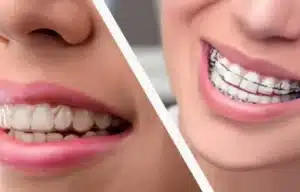
Education & Training
General Dentist:
- 5-year BDS (Bachelor of Dental Surgery) degree in India
- 1 year internship
- 2-4 weeks additional Invisalign certification course
- Broad training across all dental areas
- Focus: General oral health
Orthodontist:
- 5-year BDS degree (same as dentist)
- 3-year specialized MDS (Master of Dental Surgery) in Orthodontics
- Thousands of hours training in tooth movement
- Advanced training in bite correction and facial structure
- Focus: Exclusively tooth and jaw alignment
Key Insight: An orthodontist completes 4-5 times more specialized training than a dentist offering aligners.
Experience & Expertise
| Aspect | General Dentist | Orthodontist |
| Tooth Movement Training | Basic 2-4 weeks | 3 years intensive |
| Case Types Handled | Mild to moderate only | All severity levels |
| Complex Case Experience | Limited | Extensive |
| Bite Correction | Basic understanding | Expert specialization |
| Technology Proficiency | Manufacturer templates | Custom modifications |
| Success Rate | 70-80% | 85-95%+ |
Scope of Practice
Dentists with Aligners:
- Handle mild to moderate spacing and crowding
- Treat patients with good baseline oral health
- Use standard aligner plans with minimal customization
- Often refer complex cases to orthodontists
- May not monitor bite changes adequately
Orthodontists:
- Handle mild, moderate, AND severe cases
- Correct complex bite problems (overbite, underbite, crossbite)
- Customize aligner plans for individual patients
- Manage extraction cases when necessary
- Adjust treatment on the fly based on patient response
Treatment Planning
This is where the biggest difference shows. Dentist vs orthodontist clear aligner treatment planning is fundamentally different:
General Dentist Approach:
- Uses Invisalign’s standard ClinCheck plan
- Makes minimal customizations
- Focuses on tooth position only
- May not account for root movement
- Limited ability to adjust if teeth don’t move as planned
Orthodontist Approach:
- Creates customized treatment plans
- Considers bone structure, root position, facial proportions
- Monitors bite changes continuously
- Makes strategic adjustments during treatment
- Prevents relapse through retention planning
- Addresses jaw alignment issues
When to Choose Each Provider
Choose a General Dentist IF:
✓ Your case is mild: Small spacing (<3mm) or slight crowding
✓ You have good baseline bite: No significant bite problems
✓ You have excellent oral health: No gum disease or cavities
✓ Your dentist has documented experience with aligners
✓ You prioritize convenience: Already see this dentist
✓ Cost is critical factor: Slightly less expensive
Reality Check: Even if these apply, seeing an orthodontist first for assessment is smart. Many “mild” cases have hidden complexities.
Choose an Orthodontist IF (RECOMMENDED):
✓ Your case is moderate to severe: Visible crowding or spacing
✓ You have bite problems: Overbite, underbite, crossbite
✓ You have gum disease history: Need expert monitoring
✓ You want maximum results: Best outcome important
✓ You need professional assessment to determine suitability
✓ You have complex dental history: Previous orthodontics, extractions
✓ You want expert customization: Not standard templates
Quality Indicators: How to Identify Good Providers
What to Check for Dentists Offering Aligners:
Red Flags:
- Invisalign certificate is their ONLY orthodontic training
- They rarely refer complex cases to orthodontists
- They charge significantly less (indicates cutting corners)
- No specialized imaging (3D CBCT scanning)
- Limited knowledge of bite mechanics
- Can’t explain force vectors or tooth movement
Green Flags:
- Additional post-graduate training in orthodontics
- Clear referral protocol for complex cases
- Advanced technology (3D scanning, digital planning)
- Regular continuing education in aligners
- Can explain their treatment philosophy
- Shows before/after cases with detailed analysis
What to Look for in Orthodontists:
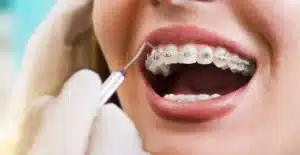
Essential Credentials:
- MDS in Orthodontics (Master of Dental Surgery)
- 3+ years specialized training documented
- Registered with Dental Council of India (DCI)
- Active membership in Indian Orthodontic Society
Quality Indicators:
- Published research or case studies
- Advanced technology integration
- Comprehensive treatment planning
- Regular patient monitoring protocols
- Honest about limitations
- Clear refinement policies
Hidden Costs You Should Know About
With General Dentists:
- Refinements charged separately (₹10,000-30,000 each)
- Retainer costs extra
- Emergency visits = additional fees
- If treatment fails, starting over = full new cost
- May need orthodontist later for salvage (most expensive option)
With Reputable Orthodontists (Like White Stone):
- Free unlimited refinements included
- Retainers included
- Emergency support included
- Proper planning prevents treatment failure
- Comprehensive approach reduces need for additional providers
Real Success Rates: The Research
According to research published in the American Journal of Orthodontics:
- General Dentists: 70-80% success rate for mild cases
- Orthodontists: 85-95%+ success rate across all cases
- Patient Satisfaction (Dentist): 75%
- Patient Satisfaction (Orthodontist): 88%+
The difference matters. A 20% failure rate means 1 in 5 patients have problems.
Questions to Ask Before Choosing
For Any Provider:
- “What is your specific training in orthodontics?”
- “How many clear aligner cases have you completed?”
- “What’s your success rate percentage?”
- “What happens if teeth don’t move as planned?”
- “How often will I have appointments?”
- “Are refinements included in the cost?”
- “What’s your refund/revision policy?”
- “Can you handle severe crowding/bite problems?”
- “Do you use 3D treatment planning?”
- “What technology do you use for monitoring?”
Specifically for Dentists:
- “If my case becomes complex, do you refer to an orthodontist?”
- “Do you have an orthodontist you partner with?”
- “What percentage of your aligners refer to specialists?”
Specifically for Orthodontists:
- “What’s your MDS specialization in?”
- “Are you registered with the Dental Council?”
- “What percentage of cases need refinements?”
Success Stories: The Right Provider Makes Difference
Case #1: Mild Crowding with Dentist
- Patient: Priya, 26, mild crowding
- Provider: General dentist with aligners
- Result: Excellent, 8 months, ₹50,000
- Outcome: SUCCESS ✓
Case #2: Moderate Crowding with Wrong Provider
- Patient: Rajesh, 32, moderate crowding
- Provider: General dentist
- Expected: 12 months
- Reality: 20+ months, multiple refinements
- Cost: ₹50,000 + ₹45,000 refinements = ₹95,000
- Outcome: COSTLY MISTAKE ✗
Case #3: Moderate Crowding with Orthodontist
- Patient: Anjali, 32, moderate crowding
- Provider: Specialist orthodontist
- Actual: 14 months, included refinements
- Cost: ₹1,20,000 (includes retainers, monitoring, refinements)
- Outcome: SUCCESS + PROFESSIONAL MONITORING ✓
Key Lesson: The cheapest option often becomes the most expensive.
White Stone’s Approach: Experienced Orthodontists
At White Stone, we believe quality clear aligner treatment requires orthodontic expertise. Here’s why our orthodontists are qualified:
✓ MDS Specialists: All providers have 3-year specialized training
✓ Expert Technology: Advanced 3D planning and monitoring
✓ Personalized Plans: Every patient gets customized treatment
✓ Complex Case Experience: We handle severe crowding, bite issues, extractions
✓ Free Refinements Included: Unlimited revisions guarantee success
✓ Transparent Process: Clear communication throughout
Learn more about our expert providers
Decision Framework: Choosing Your Provider
Start Here: Assess your case complexity
Step 1: Self-Assessment
- Mild case (small gaps/slight crowding) → Either provider acceptable
- Moderate case (visible crowding/minor bite issues) → Orthodontist recommended
- Severe case (major crowding/bite problems) → Orthodontist essential
Step 2: Get Multiple Consultations
- Book with 1-2 general dentists offering aligners
- Book with 1-2 orthodontists
- Compare treatment plans, costs, and confidence in provider
Step 3: Trust Your Instincts
- Who explained things clearly?
- Who asked detailed questions about your goals?
- Who discussed limitations honestly?
- Who seemed rushed vs. thorough?
Step 4: Verify Qualifications
- Ask for credentials proof
- Check with local dental association
- Read patient reviews specifically about results
- Request before/after case examples
FAQ: Dentist vs Orthodontist for Clear Aligners
Q: Can a dentist provide quality aligner treatment?
A: Yes, IF they have proper training and experience. But even certified dentists have limitations with complex cases. For best results, orthodontist is preferred.
Q: Why would I choose a dentist then?
A: Convenience if your dentist is excellent, or cost savings if your case is truly mild. But get an orthodontist assessment first to confirm “mild.”
Q: How do I know if a dentist is qualified?
A: Ask about post-graduate training, case numbers, success rates, and whether they refer complex cases. Legitimate providers are transparent.
Q: Is an orthodontist always worth the extra cost?
A: Yes, for most patients. Expert planning + monitoring + refinements prevent costly mistakes that end up costing more than orthodontist fees.
Q: What if I start with dentist and it’s not working?
A: You can switch to orthodontist for salvage treatment. But this is expensive and extends your overall timeline.
Q: Does White Stone only use orthodontists?
A: Yes. All White Stone providers are MDS Orthodontists with specialized training and experience.
Q: Can I negotiate price with an orthodontist?
A: Yes, especially if you ask about payment plans. White Stone offers flexible EMI options making specialist care affordable.
Q: How do I verify credentials online?
A: Contact the Dental Council of India or ask providers directly for their registration number and specialty.
Making Your Final Decision
The dentist vs orthodontist for clear aligners decision comes down to this:
Choose based on your case complexity and desired results, NOT just cost. A slightly higher upfront investment with the right specialist prevents expensive problems later.
For most Kerala patients seeking excellent results with professional oversight, White Stone’s expert orthodontists provide the confidence that treatment is in specialized hands.
Your Next Steps:
- Book Free Consultation with White Stone orthodontist
- Get professional case assessment
- Compare treatment options
- Make informed decision
- Start your smile journey with confidence