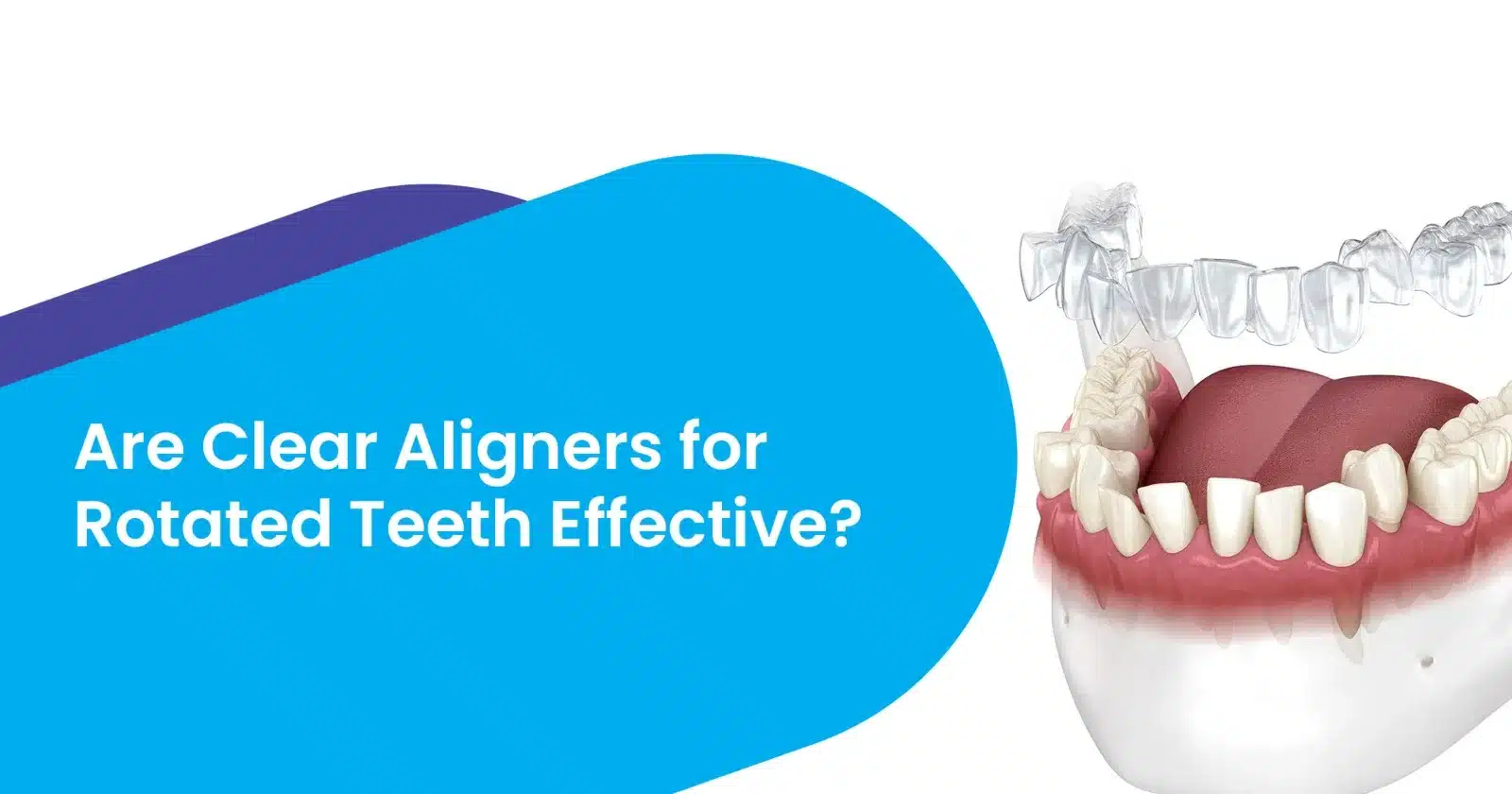
Rotated teeth can affect both your smile and confidence, making everyday moments like talking or smiling feel less comfortable. Many people wonder whether clear aligners for rotated teeth can effectively correct tooth rotation or if traditional braces are the only option.
The good news is that modern clear aligner treatment can address many mild to moderate cases with a discreet and comfortable approach. At White Stone Aligners, we use advanced digital planning and expert supervision to help patients across India achieve a straighter, more confident smile.
Can Aligners Fix Rotated Teeth?
Yes, aligners can fix rotated teeth in most mild to moderate cases. Rotation is one of the trickier movements in orthodontics, because a tooth must turn on its own axis instead of simply tipping or sliding. Because Clear Aligners Move Your Teeth in small, calculated stages, rotation happens gradually and safely without overloading the tooth root.
Patients often ask, can clear aligners fix rotated teeth as reliably as metal braces? Research on aligner protocols shows aligners manage mild rotation well, but rotations beyond 15 degrees are harder to correct and usually need extra planning steps or refinement rounds. Traditional braces apply continuous wire pressure, which can suit very severe rotation, while aligners rely on staged, removable trays that are gentler and far less visible.
Several factors decide how well treatment works:
- Degree and direction of rotation
- Shape and size of the tooth
- Use of attachments for grip
- How consistently you wear your trays
With the right plan, most patients see steady, predictable improvement.
What Are Rotated Teeth?
Rotated teeth are teeth that have turned inward or outward from their normal position, instead of sitting flat within the dental arch. This is different from crowding, where teeth simply overlap due to lack of space, although the two problems often appear together.
Rotation is usually described by direction, such as mesial rotation (turned toward the front of the mouth) or distal rotation (turned toward the back). Premolars and canines are common trouble spots because they have round crowns that turn easily when space is tight.
Rotation often happens because of:
- Limited jaw space during growth
- Early loss of baby teeth
- Genetics and tooth bud position
- Thumb sucking or tongue habits in childhood
A twisted tooth can affect your bite and make cleaning harder. Many patients searching for clear aligners for twisted teeth are actually describing this same issue, just in different words. Rotation is also closely linked to crowding, and many Clear Aligners for Crowded Teeth plans address both problems together in one coordinated treatment.
How Clear Aligners for Rotated Teeth Work
Clear aligners for rotated teeth use small, calculated force at specific points on the tooth surface. Each tray nudges the tooth a fraction of a degree, and the next tray continues the movement in a planned sequence until the tooth sits flat within the arch.
At White Stone Aligners, treatment planning starts with an AI-powered 3D scan of your teeth. This lets the orthodontist map out every stage of rotation before a single tray is manufactured, so both you and your dentist can see the expected outcome in advance.
For patients across Kerala and other parts of India, this digital-first approach also means fewer in-clinic visits for adjustments. Once your rotation plan is approved, most of your progress happens simply by switching trays at home on schedule, with periodic check-ins to confirm your teeth are turning as expected.
Attachments and IPR for Better Control
For rotation, dentists often add tooth-coloured attachments. These small bumps give the aligner extra grip so it can turn the tooth rather than just tip it sideways.
Interproximal reduction, or IPR, may also be used. This gently reshapes the space between teeth, giving a rotated tooth the room it needs to turn properly. Your dentist may also plan slight overcorrection, meaning the tooth is moved a little past its final position, to help prevent it from drifting back once active treatment ends.
How Long Do Aligners Take to Fix Rotated Teeth?
Timelines vary with the severity of rotation. Mild cases often show visible change within 2 to 3 months, while more complex rotations can take 9 to 18 months for full correction.
Choosing the best clear aligner treatment from an experienced provider makes a real difference here. Detailed 3D scanning and a well-planned attachment strategy reduce the number of refinements needed later in treatment. Cases that also involve closing Teeth Gaps with Clear Aligners may need a slightly longer timeline to finish evenly across the whole arch.
Regular check-ins matter too. Your dentist tracks whether each tooth is turning as planned and adjusts your treatment plan if progress slows down.
Clear Aligners for Crooked Teeth, Gaps, and Crowded Teeth

Rotation rarely appears alone. Many patients also deal with overlapping teeth, and clear aligners for crooked teeth use the same digital planning approach to correct multiple issues together in a single set of trays.
Your dentist may also plan to close Teeth Gaps with Clear Aligners in the same sequence as correcting rotation. This works because Clear Aligners Move Your Teeth across the whole arch, not just one spot, which keeps your bite balanced as treatment progresses. Many Clear Aligners for Crowded Teeth cases include IPR or mild arch expansion to create the space a rotated tooth needs to sit correctly.
Tips to Get the Best Results
Getting the outcome you expect from rotation treatment depends as much on daily habits as it does on the treatment plan itself. Even the most precise digital plan can fall short if trays are not worn long enough each day or if sets are switched out of order, so consistency is just as important as the technology behind your smile plan.
- Wear aligners 20 to 22 hours daily for consistent pressure
- Switch trays exactly on schedule, not early or late
- Keep every review appointment so your dentist can track rotation progress
- Ask about attachments if your case involves noticeable rotation
- If your case combines clear aligners for crooked teeth with rotation, ask about a combined attachment plan
Following these steps helps your treatment stay on track and reduces the chance of extra refinement rounds down the line.
Achieve a Straighter Smile With Clear Aligners
Clear aligners for rotated teeth can deliver effective results when treatment is carefully planned and followed consistently. With AI-powered scanning, customized treatment planning, and expert orthodontic supervision, White Stone Aligners helps patients manage tooth rotation with greater precision and confidence.
If you’re searching for trusted clear aligner treatment providers in Kerala, White Stone Aligners can assess your teeth, explain your treatment options, and create a personalized plan designed around your smile goals.
Ready to correct rotated teeth? Consult White Stone Aligners today and discover your personalized clear aligner treatment plan.
📞 +91 9797974769
📧 info@whitestonealigners.com
FAQs
Q1. Can clear aligners fix rotated teeth completely?
A. Yes, mild to moderate rotations usually respond well with proper planning and attachments.
Q2. How many degrees of rotation can aligners correct?
A. Aligners handle rotations up to about 15 degrees most predictably.
Q3. Are clear aligners for twisted teeth effective for everyone?
A. They work well for most cases, though severe twisting may need extra steps.
Q4.Do rotated teeth need attachments?
A. Most rotation cases need attachments for better grip and control.
Q5. Is treatment for rotated teeth painful?
A. Mild pressure is normal, but aligners are generally more comfortable than braces.